
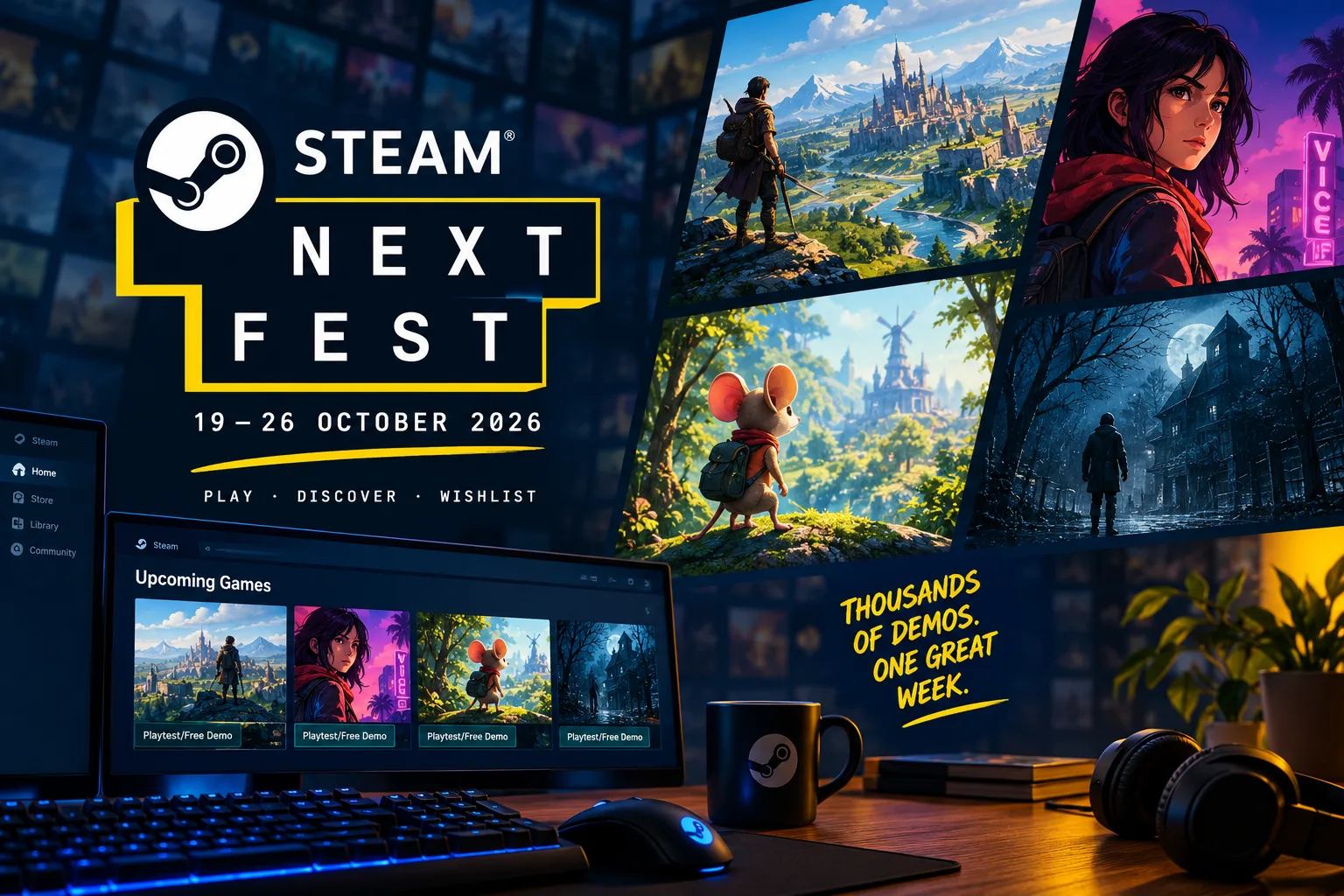
Steam Next Fest runs until 26 October with more than 8,000 free demos of upcoming games. The festival gives PC players a week to test games before they buy them. It also exposes the harder problem: separating original work from a flood of low-effort releases.
Thousands of games, no purchase required
Steam Next Fest is a recurring event Valve runs on the Steam platform. Its main attraction is not discounted games but playable previews of games that have not launched yet. This edition opened on 19 October and runs until 19:00 South African time on 26 October.
There is no limit on how many demos you can try. You need a Steam account, and the demos themselves are free to download and play.
Browse the full event on the Steam Next Fest page.
The catalogue covers everything from strategy and simulation to horror, action and role-playing games, plus experimental indie projects. Some demos open with a short introduction, others hand you a substantial slice of the finished game.
For developers, the festival is a way to build an audience, collect feedback and generate interest ahead of launch. For players, it is a way to find games that would otherwise slip past.
What should you play?
Nobody browses 8,000 demos in a week. Start with the genres you enjoy and narrow the search with the filters on Steam's event page, which also serves recommendations as the festival progresses.
- The Wolf Among Us Remastered: A dark detective thriller where folklore is real, rebuilt from Telltale's acclaimed comic-book adventure. Due 29 October.
- Hela: of Mice & Magic: A brave little mouse explores a Northern Sweden-inspired world, solves puzzles and can call on copies of itself to solve problems solo. The full game supports four-player co-op. Due 1 December.
- Emberville: Explore a magical underground dungeon where death does not last, then rebuild the ruined town above it. Joins Early Access on 27 October.
- DRAGON QUEST MONSTERS: The Withered World: Befriend monsters, raise them, breed new ones and send them into battle. Due 3 December.
Availability shifts as the week runs, so check each store page before you install anything.
The problem with 8,000 demos
More choice is easy to sell. In practice it creates a discovery problem.
This edition has drawn attention for the size of its catalogue, and with it complaints about low-effort games, AI-assisted clones and projects that look built to farm the sheer volume of releases on Steam.
AI tools help small teams make artwork, prototype mechanics and move faster. Used with judgement they lower the barrier to entry and let independent creators finish an idea.
The trouble starts when the same tools make it cheap to ship large numbers of derivative games with no original design behind them.
When a festival holds thousands of demos, attention becomes a commodity. A developer who spent years on an original game now competes with projects that were assembled in a fraction of the time.
The question is not whether a game uses AI. It is whether the game gives you something worth playing, and whether you can find it in the noise.
A blanket rejection of AI would throw away useful tools and talented developers. Accepting every AI-generated release without scrutiny would be just as misguided.
For players, the practical answer is to look past the artwork and the trailer. Read the description, watch real gameplay, check the developer's history and read what other players say.
Why demos still matter
A trailer can make almost any game look exciting. A demo is a much better test.
You find out whether the controls feel right, whether the game holds your attention and whether it runs acceptably on your hardware. You also catch problems before you pay for it.
That matters in South Africa, where game prices, data costs and hardware upgrades turn a bad purchase into an expensive mistake. Demo sizes vary, so check the requirements before you install, particularly on a limited connection.
Wishlist the ones you like as well. Steam notifies you when those titles launch, which saves you watching store pages.
How to get the most out of Next Fest
- Set a time budget, not a money budget. Pick a handful of promising demos instead of downloading everything that catches your eye.
- Check system requirements first. A demo that struggles on your PC is not worth the download, particularly if storage space is limited.
- Look for real gameplay. Trailers and screenshots sell. Hands-on time tells.
- Wishlist the good ones. Let Steam notify you when they launch.
- Give smaller developers a chance. Some of the best finds are the ones you did not go looking for.
The verdict
Steam Next Fest shows both the strength and the difficulty of PC gaming. Thousands of developers reach a global audience, and players try upcoming games without paying first. That access is worth having.
A bigger catalogue does not automatically mean better games or easier discovery. As AI tools widen the gap between what a solo developer can finish and what a studio can ship, platforms and players need better ways to find original work and reward the people who made it.
For now the approach is simple. Explore, experiment and judge each game on what it gives you to play.
Steam Next Fest runs until 26 October. Pick a few demos from the official event page and see what you find.