
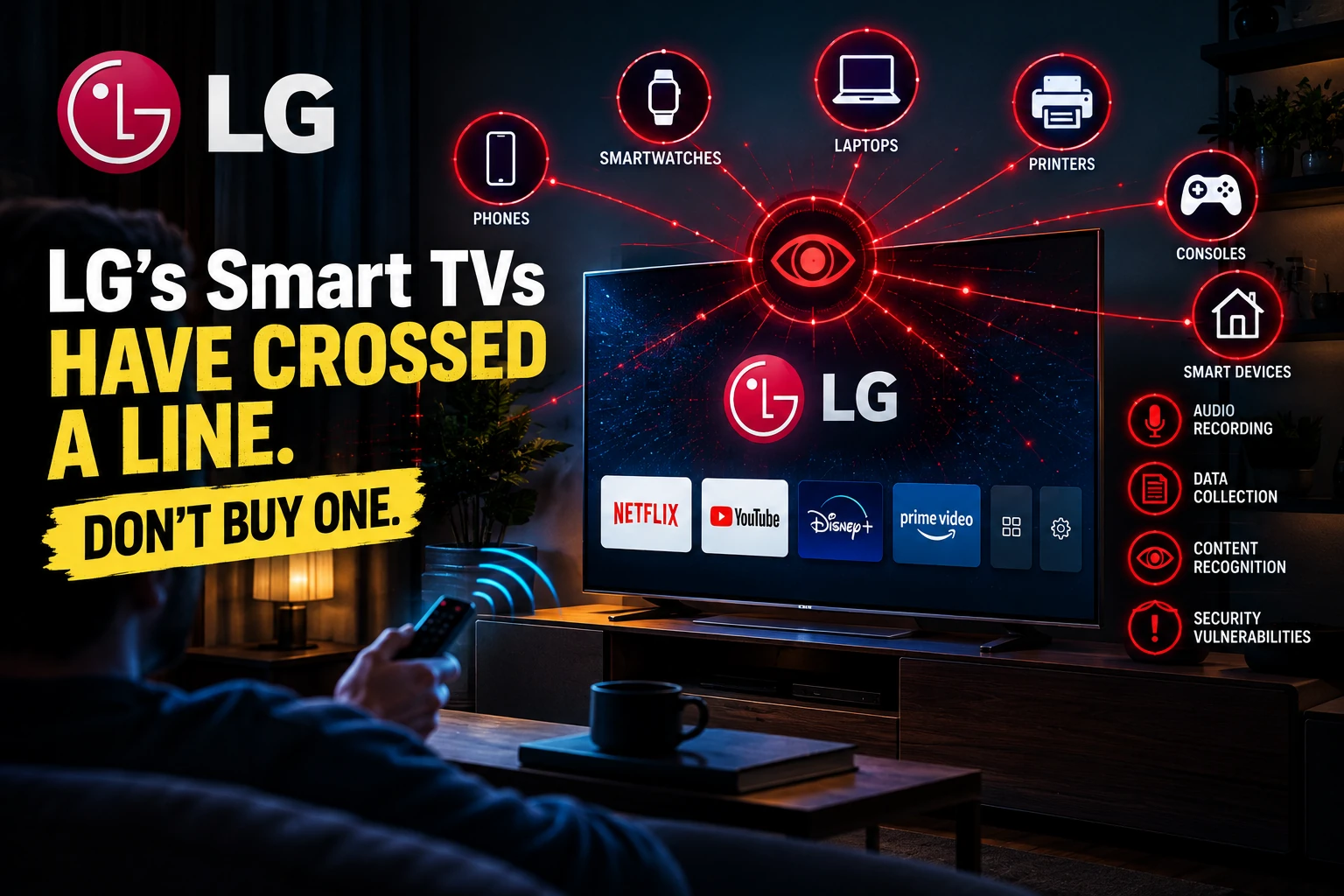
LG builds excellent display panels. That no longer settles the question. A 135-minute investigation from GamersNexus, with Level1Techs and independent researchers, found LG smart TVs scan home networks, collect extensive telemetry, run content recognition, and carry reported flaws that could expose the microphone. Our advice is direct: do not buy one.
You can watch the full evidence in the GamersNexus investigation.
A TV has no business mapping your home network
The investigation found LG TVs scan the local network and identify unrelated devices, including phones, smartwatches, printers, and other hardware owned by people who had no idea the TV was under test. A screen in a living room should not perform household reconnaissance.
LG has not denied the behaviour. Its response says its TVs can scan for and connect to nearby devices on the same network to support smart-TV functions. Ars Technica reports on both the testing and LG's explanation.
That answer fails a basic test. A TV can offer HDMI inputs, streaming apps, and casting without building an inventory of every device in a home. A vague reference to smart features is not informed consent, and it does not justify collecting data about everyone on the same Wi-Fi network.
The microphone issue carries higher stakes
GamersNexus showed audio-related data and plaintext transcripts tied to the TV's voice features, including material captured after a voice interaction should have ended. The report also describes recordings stored while a TV was offline, ready to upload once connectivity returned.
LG denies that its sets record ambient conversation outside a held remote voice-button press or an enabled Hi LG wake-word interaction. It says wake-word detection runs locally and the set deletes unrecognised audio. TechRadar reproduces LG's full public position here.
That denial leaves the core problem unsolved. A voice-enabled TV needs clear, visible, trustworthy limits on when it listens, what it keeps, and where that data goes. A long privacy policy and a maze of setup toggles do not meet that standard.
Privacy abuse becomes a security threat
The security findings matter as much as the data collection. GamersNexus says researchers found vulnerabilities, including an alleged remote-code-execution path, that could let an attacker compromise a TV and abuse its microphone. Researchers withhold technical details during responsible disclosure, so treat the exact exploit chain as reported rather than independently confirmed.
That qualifier does not make the risk small. An internet-connected computer with a microphone, persistent power, access to a home network, and weak security does not belong in bedrooms, offices, clinics, and living rooms. The Register covers the reported vulnerability disclosure and the alleged remote-code-execution issue.
LG's response rejects the spying label and defends specific features. It does not answer the full package: network discovery, behavioural profiling, retention, advertising uses, consent design, and the reported defects.
Optional is not good enough
LG says features such as Automatic Content Recognition, voice recognition, and interest-based advertising are optional and off by default. Even if that claim holds in full, it misses the point.
Buyers should not need network engineering skills, a close read of every policy, packet captures, and a pile of opaque settings to stop a premium TV from acting like an advertising sensor. Privacy should be the default. A display should display. Smart features should be opt-in, narrow in scope, and easy to understand.
LG chose a different model. It built TVs around data collection, then asked buyers to trust a privacy framework that its own behaviour has undermined.
The buying recommendation
Do not buy an LG smart TV until LG delivers a credible, independently verified fix for the reported security issues and changes its privacy posture in a way buyers can check.
If you already own one, keep it updated, switch off voice recognition and content recognition, keep it off your main household network where practical, and weigh the privacy record of any separate streaming device before you plug one in. The safest option is to keep the TV offline entirely.
Good OLED hardware does not excuse invasive software, unclear consent, home network scanning, or security failures with microphone-level consequences. That is a breach of trust.